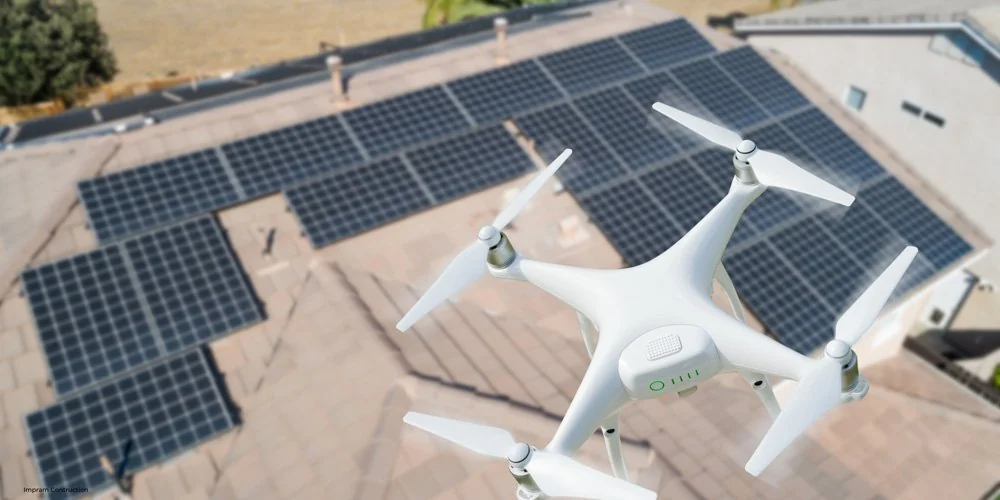
Use aerial photographs to investigate a clear concern, with interpretation and a plan for any areas the camera cannot assess.
Begin with the question about your roof
A drone can provide views of roof surfaces that are difficult to see from the ground. The most useful instruction explains why you need those views: a visible slipped tile, a recurring stain indoors, uncertainty about a chimney or concerns following bad weather.
Tell the surveyor where the concern is and when you first noticed it. Share previous reports, photographs and repair information where available. A short history helps direct the inspection towards the relevant areas.
Agree whether you need photographs alone or a report interpreting the findings. They are different deliverables.
Sources [3]
Understand what the images can show
Depending on visibility and access, aerial photographs may help record roof coverings, ridge details, exposed flashing, chimney surfaces and gutters. They can also provide a reference for discussing maintenance or asking a contractor to inspect a particular location.
The value lies in clear identification. Ask for photographs that show both the wider roof and the detail being discussed, with labels that make the location understandable.
Avoid treating image quantity as a measure of quality. Ten clearly explained photographs may help you make a decision more readily than a large folder of unlabelled files.
Recognise what remains hidden
A camera records visible surfaces. It does not establish the condition of concealed fixings, timbers or materials beneath a roof covering. An apparently tidy exterior is not proof that every part of the roof is sound.
RICS guidance on surveying technology stresses the importance of professional interpretation and inspection context. An internal inspection may be needed to understand what external signs mean.
Illustrative example: a photograph of a displaced tile can identify a location for investigation. It cannot, by itself, establish the condition of the supporting structure or prove the cause of an indoor stain. The next step should respond to the evidence and the remaining uncertainty.
Sources [3]
Allow for flight planning
Not every property can be inspected by drone on every visit. Airspace, people nearby, the aircraft, weather and the ability to maintain a safe view of the flight can affect feasibility.
CAA requirements depend on the aircraft and operating category. Relevant restrictions on flight, airspace and privacy must be considered when planning the inspection. Commercial drone work requires at least third-party insurance.
Before booking, ask who will operate the aircraft, how the proposed flight will be assessed and what happens if flying is unsuitable. A sensible alternative may involve another inspection method or a return visit.
Turn the findings into a next step
A useful report should identify what was seen, what could not be inspected and what action is recommended. Ask whether a concern needs prompt attention, further investigation or planned maintenance.
Where repairs are proposed, use the findings to request a clearly defined scope of work. Photographs help explain a location, but a contractor may still need access to confirm the detail before specifying repairs.
Keep the dated report with your property records. It provides a reference for future discussions without pretending to be a guarantee of the roof’s condition.
Your checklist
- Explain the problem and its history.
- Confirm the roof areas to be considered.
- Agree photographs, interpretation and report format.
- Ask about flight feasibility and insurance.
- Confirm the approach if flying cannot proceed.
- Request clear limitations and recommended next steps.
Common questions
Does a drone survey replace a full building survey?
No. Its scope is different. Agree how aerial findings will fit with any wider inspection.
Does a drone remove the need for physical access?
Sometimes it reduces the need for initial access. Further inspection or repairs may still require suitable access equipment.
Sources & further reading
Source material checked on 6 October 2026. Official guidance may change.
- CAA — Where you can fly
- CAA — Flying drones for work
- RICS — Technology must supplement not supplant surveyors
General guidance for property owners in England. Your property, circumstances and agreed inspection scope determine the advice you need.
A QUESTION ABOUT YOUR PROPERTY?
Drone Roof Surveys
A new perspective on hard-to-reach places.