
Start with the source of excess moisture. A surface treatment may change what you see without explaining why the problem appeared.
Take the signs seriously
A damp patch is information about a building, not a complete diagnosis. Note where it appears, when it changes and what has already been tried. A stain near a window, mould behind furniture and damp around a chimney are different observations; they should not automatically receive the same repair specification.
Government guidance for England identifies health risks from damp and mould, particularly for vulnerable occupants. Report concerns promptly if you rent. If you are worried about symptoms, seek advice from a healthcare professional; a building inspection cannot assess your health.
Sources [1]
Keep the possible causes open
Moisture may come from condensation, rain entering through the building fabric, plumbing leaks or moisture associated with ground contact. More than one mechanism can be involved. Government guidance cautions against treating normal domestic activities as a substitute explanation for building deficiencies.
For a traditional building, Historic England emphasises understanding how its construction handles moisture. The investigation should connect the visible symptom with the surrounding building and its history. Choosing a treatment first and looking for a justification afterwards can leave the underlying issue unresolved.
Record the pattern, safely
Create a simple dated record. Photograph the affected area from the same position, include a wider view showing its location and note whether it followed rainfall, a plumbing event or a period when heating or ventilation was not working normally. Keep previous repair invoices and correspondence together.
For example, a mark that becomes more noticeable after wind-driven rain is a useful clue to share. It does not prove a particular defect. The purpose of your record is to help an inspection address a question, not to settle the cause remotely.
Do not delay reporting or necessary action while building the perfect record. Avoid disturbing affected materials simply to obtain a better photograph. Government guidance stresses both prompt action and tackling underlying causes, rather than just removing visible mould.
Sources [1]
Look beyond the affected wall
Historic England’s maintenance guidance highlights rainwater disposal, ventilation, external ground levels and previous alterations as relevant considerations in older homes. Some traditional materials absorb and release moisture; an unsuitable impermeable repair can change that behaviour.
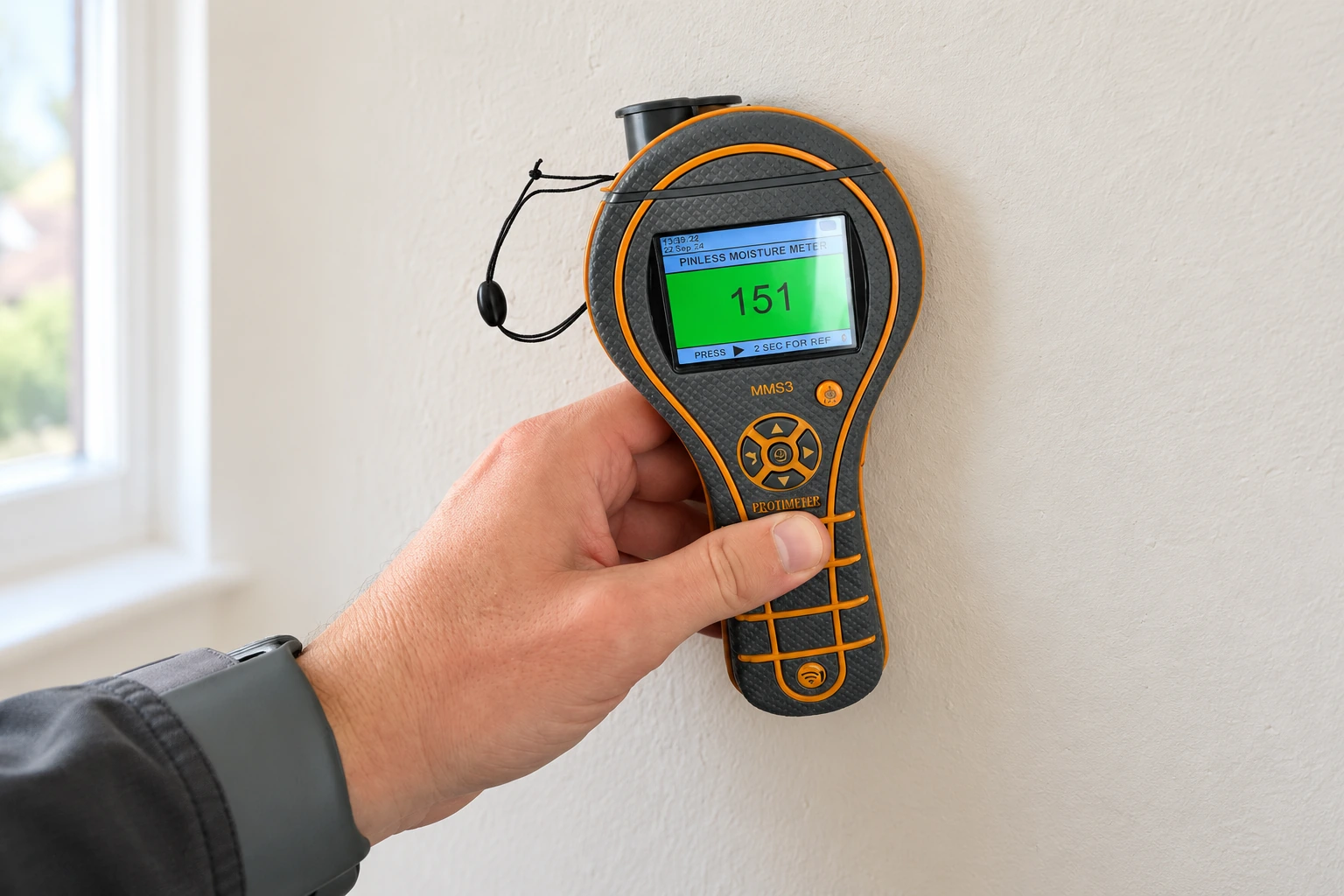
That is why the inspection brief should include relevant outside areas and nearby rooms where access is possible. Ask how the surveyor will distinguish observations, likely explanations and matters needing further investigation. A reading or photograph is most useful when its location, limitations and relationship to the building are explained.
If the home is listed or in a conservation area, check whether proposed alterations or invasive investigations need consent before commissioning them. A treatment that suits a different property may be inappropriate here.
Agree the next step and a way to review it
Ask for recommendations that you can act on: the location of the concern, the evidence behind the assessment, the proposed next step and any remaining uncertainty. Where further access or monitoring is needed, establish who will arrange it and how the results will be considered.
Keep the investigation separate from the decision to accept a repair quotation. When work is proposed, ask the contractor to relate it to the identified problem and explain what should be checked afterwards. Save completion photographs and maintain the same room-by-room record. This gives a later inspection something concrete to compare with the original condition.
Your checklist
- Dated photographs with room names and a wider location view.
- A short timeline of changes and any reported leaks.
- Details of heating, ventilation and previous repairs.
- Relevant correspondence if the property is rented.
- Questions about the proposed cause, repair scope and follow-up.
Common questions
Will repainting solve the problem?
Redecoration alone does not establish or remove a moisture source. Investigate why the area became damp and agree the appropriate remedial steps.
Can a diagnosis be made from one photograph?
A photograph can help explain the concern, but it cannot show the whole building or inaccessible areas. Ask what site inspection or further information is needed.
Sources & further reading
Source material checked on 6 October 2026. Official guidance may change.
- GOV.UK — Understanding and addressing damp and mould in the home
- Historic England — Investigation of moisture in traditional buildings
- Historic England — Understanding decay in an older home
General guidance for property owners in England. Your property, circumstances and agreed inspection scope determine the advice you need.
A QUESTION ABOUT YOUR PROPERTY?
Damp & Mould Surveys
Understand the moisture. Find the next step.